What to Look for When Buying Beef Jerky: 7 Things That Matter
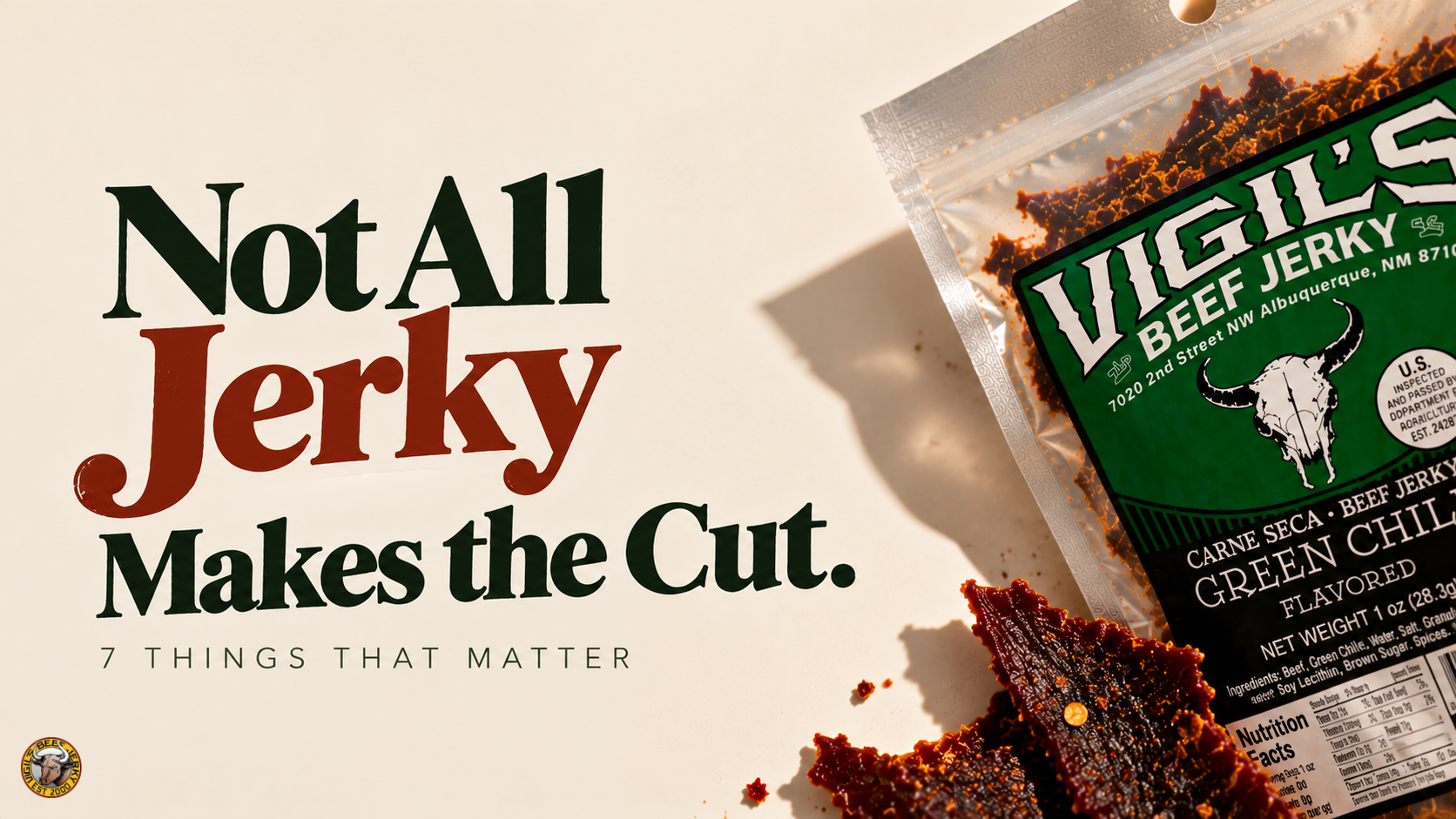
There’s a reason beef jerky is a road trip favorite. It’s easy to carry, doesn’t need a plate, and you can snack on it somewhere between Albuquerque and Santa Fe without making a whole mess in the car.
But here’s the thing: not every bag is worth bringing along.
Some jerky is all chew and no flavor. Some is sweeter than you expected. And sometimes, you pick a flavor that sounds amazing on the package but doesn’t quite hit the spot.
So, how do you pick a good one?
You don’t need to be a jerky connoisseur or spend half an hour reading labels in the grocery store. Just know a few things before you toss that bag into your cart.
1. Know What You’re Biting Into
First, take a look at the beef.
Some jerky is cut from whole pieces of meat, while other products are made from chopped and formed beef. Whole-muscle jerky usually has visible fibers, so you can see the natural grain of the meat.
Why does that matter? Because the cut and preparation can affect the texture of your snack.
Have a look at the product description before buying. A brand that explains what goes into its jerky makes your decision a little easier. And don’t let a fancy package convince you that you’re getting better beef. The details matter more than the label’s good looks.
2. Are You a Chewy Jerky Person or a Crispy One?
You’d be surprised how much this matters.
Some folks love a thick piece of jerky that takes its time. Others want something they can bite into without giving their jaw a workout.
Then there’s carne seca.
If you’ve spent time around New Mexico, you may already know this style of dried meat. It’s thin, dry, and crispy, with a very different bite from the thick, chewy jerky you see in plenty of stores.
That’s the kind of jerky Vigil’s is known for. It’s a good option if you want to try something a little different from the usual gas-station snack.
And if you’ve never tried crispy carne seca, don’t knock it till you’ve had a piece.
3. The Front of the Bag Isn’t Telling You Everything
We’ve all been there. You see bold flavor, original recipe, or premium quality printed across a package, and suddenly the snack looks pretty tempting.
But turn it around.
The ingredient list tells you what the product actually contains. Check the beef, seasonings, sweeteners, and other ingredients. You might prefer a simple recipe, or you might be the person who wants every bit of garlic and pepper you can get.
There’s no need to make it complicated. Just know what’s going into your snack.
And if you have allergies or avoid certain ingredients, definitely check the label. Recipes can differ from one flavor to another, even within the same brand.
4. Don’t Pick a Flavor Just Because It Sounds Tough
A name like extra hot can be tempting, especially if you like a little heat. But the hottest jerky isn’t automatically the tastiest.
Think about what you actually enjoy eating.
Like smoky flavors? Look for those. Prefer something sweet with a little savory kick? Teriyaki might be your thing. Want chile? Well, you’re talking to the right part of the country.
Here in New Mexico, red chile and green chile aren’t just something you order with your enchiladas. They show up in all kinds of foods, and jerky is no exception.
If you’re new to chile-flavored jerky, start with the one that sounds good to you. You can always turn up the heat next time.
The goal isn’t to prove how much spice you can handle. It’s to find a flavor you’ll actually want to eat again.
5. Take a Peek at the Nutrition Facts
Let’s keep this simple. You don’t have to turn buying a snack into a science project.
But if you’re eating jerky regularly, the nutrition label is worth a look.
Check the serving size, protein, sodium, calories, and added sugar. These numbers can change quite a bit depending on the product.
A sweet teriyaki flavor, for instance, may have more added sugar than a pepper-seasoned variety. And jerky can contain a fair amount of sodium, so that’s something to keep in mind if you’re watching your intake.
Pick what works for you. A quick glance is usually all it takes.
6. Give the Package a Once-Over
This isn’t the exciting part, but it matters.
Before buying, check that the bag is sealed, the packaging isn’t damaged, and the product is within its best-before date.
Buying online? Read the product details and check how the jerky should be stored when it arrives.
Once the bag is open, follow the storage directions on the label. Not every jerky product has the same storage requirements, so it’s better to check than guess.
Nothing fancy here. Just a little common sense before snack time.
7. Find a Brand That Knows What It’s Making
You can learn a lot from how a brand talks about its product.
Does it explain its ingredients? Can you tell what makes one flavor different from another? Does it give you useful information about how the jerky is made?
Those details are more helpful than a package covered in big promises.
Vigil’s Beef Jerky has been making jerky in New Mexico since 2000, with a focus on thin, crispy carne seca and Southwestern flavors. Green chile, red chile, and Butter Mesquite bring different flavors to the table, so there’s more to explore than one kind of jerky.
It’s a little taste of New Mexico for anyone who wants something beyond the usual thick, chewy strips.
One Last Thing Before You Buy That Bag
At the end of the day, good beef jerky comes down to what you like. Maybe you want a little chew. Maybe you want a crispy bite. Maybe you’re just looking for something tasty to keep in the truck for the next stretch of road.
Check the beef, read the ingredients, and find a flavor that sounds good. Don’t pay extra just because a package looks impressive.
And if you’ve never tried New Mexico carne seca, maybe it’s time to change that. Have a look at Vigil’s Beef Jerky and see which flavor catches your eye.
Just don’t blame us if the bag doesn’t make it all the way home.